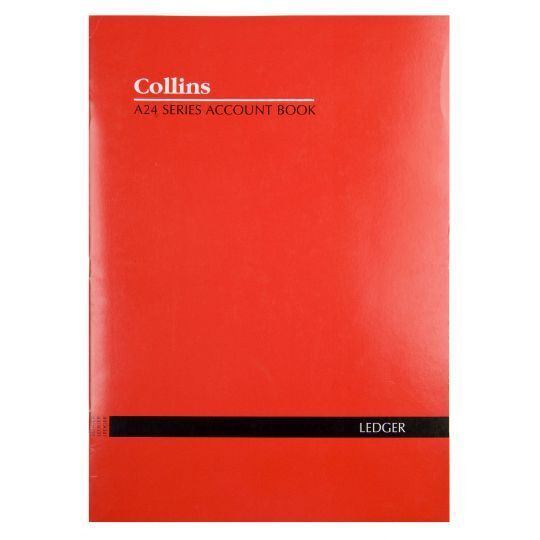
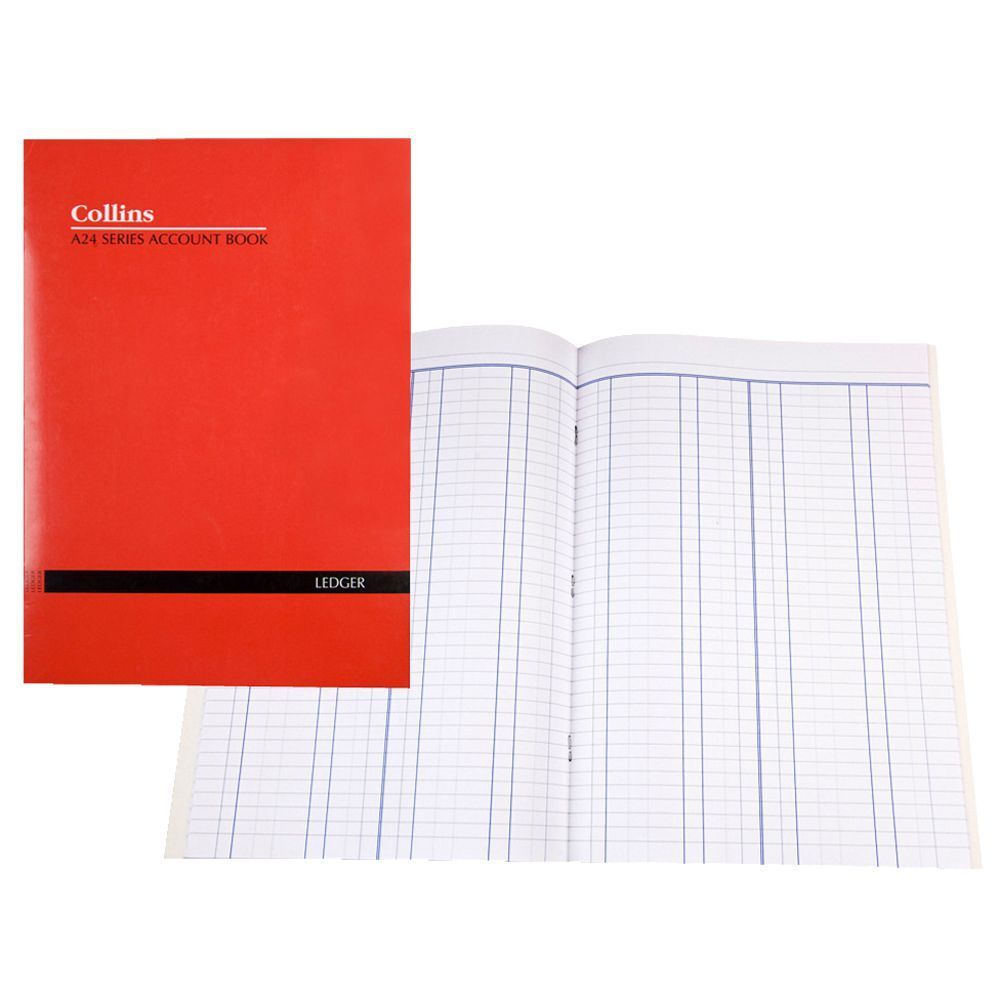
Collins A24 A4 Series Analysis Book Double Ledger - 10230
Calculate Shipping
Express Shipping - $24.99 (ETA: 4 days)
Regular Shipping - $15.00 (ETA: 6 days)
Collins A24 A4 Series Analysis Book Double Ledger - 10230
The Collins A24 A4 Series Analysis Book Double Ledger is the subsidiary ledger format in the Collins A24 range — a single book that serves as both the debtors ledger (accounts receivable) and the creditors ledger (accounts payable). In a manual double-entry bookkeeping system, every business trading on credit needs individual accounts for each customer (debtors ledger) and each supplier (creditors ledger). The Double Ledger provides both in one book: one section for debtors, the other section for creditors, designed to open right-way-up from each end. Collins — Australia's most trusted name in commercial account books — brings the same standard of construction and paper quality to the A24 Double Ledger that makes Collins the standard choice for Australian bookkeepers.
WHAT A DOUBLE LEDGER IS — THE SUBSIDIARY LEDGER SYSTEM
- The general ledger control account — the general ledger contains a single Debtors Control Account (total of all customer balances) and a single Creditors Control Account (total of all supplier balances); the subsidiary ledger is the breakdown — one account per customer or supplier; total of all individual accounts must equal the control account; this agreement is one of the core accuracy checks in manual double-entry bookkeeping
- The debtors ledger (accounts receivable) — one account per credit customer: invoices issued (debit), payments received (credit), credit notes (credit), running balance; enables the business to know exactly what each customer owes, how long each amount has been outstanding, and which accounts need follow-up
- The creditors ledger (accounts payable) — one account per credit supplier: invoices received (credit), payments made (debit), supplier credit notes (debit), running balance; enables the business to know exactly what it owes each supplier and when each payment falls due
- "Double" — one book serves both subsidiary ledgers; opens from both ends; one section for debtors, other section for creditors; both sections read right-way-up from their respective covers (⚠ confirm exact physical format from the book)
THE DEBTORS LEDGER — ACCOUNTS RECEIVABLE
- One account per customer — name, address, credit limit and trading terms at the head of each account; all transactions with that customer in one place
- Recording a credit sale — debit the customer's account (invoice issued); amount = full GST-inclusive invoice amount; posts from the Sales Day Book
- Recording payment received — credit the customer's account; record date, bank deposit reference, amount; if the customer took a settlement discount, credit the full invoice amount and note the discount; posts from the Cash Receipts Day Book
- Credit notes — credit the customer's account; note credit note number and reason; posts from the Sales Returns Journal
- Running balance — should always show Dr (customer owes money); a Cr balance means overpayment, prepayment or error — investigate
- Reconciliation to control account — total of all debtors balances must equal Debtors Control Account in the general ledger; perform at each period end; any difference is an error to locate and correct
AGED DEBTORS — CASH FLOW AND CREDIT CONTROL
- Aged debtors groups outstanding balances by overdue period: Current, 30 days, 60 days, 90+ days
- Source data comes from the debtors ledger — each open invoice's date determines its age bucket
- Credit management — identify customers approaching credit limit, consistently late payers, accounts for credit hold; aged debtors is the starting point for debtor follow-up calls
- Bad debts — ATO allows bad debts to be written off for GST and income tax purposes; the debtors ledger is the source record; retain records for 5–7 years
- Cash flow — outstanding debtors are the business's most liquid asset after cash; monitoring and collecting debtors promptly is the primary driver of operating cash flow
THE CREDITORS LEDGER — ACCOUNTS PAYABLE
- One account per supplier — name, address, payment terms at the head of each account
- Recording a supplier invoice — credit the supplier's account (business now owes more); note invoice date, number and amount; posts from the Purchases Day Book
- Recording payment made — debit the supplier's account (balance reduces); note payment date and EFT/cheque reference; if a settlement discount was taken, debit the full invoice amount; posts from the Cash Payments Day Book
- Supplier credit notes — debit the supplier's account; posts from the Purchases Returns Journal
- Running balance — should always show Cr (business owes money to supplier); a Dr balance means overpayment, prepayment or an error
- Reconciliation — total of all creditors balances must equal Creditors Control Account in the general ledger; perform at each period end
CREDITORS AND CASH FLOW MANAGEMENT
- Payment due dates — each creditor account shows when each invoice falls due; enables cash flow planning: which suppliers to pay this week, which can wait; which accounts are approaching their terms
- Settlement discounts — some suppliers offer early payment discounts ("2/7 net 30"); the creditors ledger identifies which invoices qualify; paying early for a 2% discount generates significant annualised savings
- Supplier statement reconciliation — compare the business's creditors ledger account for each supplier against the supplier's monthly statement; differences reveal invoices not received, credit notes not processed, or payments not applied; a standard accounts payable management task
CONTROL ACCOUNT RECONCILIATION — THE DOUBLE-ENTRY CHECK
- The process — period end: total all debtors ledger balances = Debtors Control Account? Total all creditors ledger balances = Creditors Control Account? Both must agree; discrepancy = error to find and fix
- Why it works — every transaction posts twice: once to the control account (double-entry system), once to the individual account (subsidiary ledger); if both streams are maintained consistently, the subsidiary ledger total must equal the control account
- Error location — if totals disagree, work backwards through postings since last reconciliation; common errors: posting to control account but not to individual account; wrong amount; wrong account; transposition error
- ATO relevance — Trade Debtors (control account balance) appears in the Balance Sheet as a current asset; Trade Creditors as a current liability; accountants and ATO officers expect control accounts to agree with subsidiary ledger totals
WHO USES A DOUBLE LEDGER
- Small to medium businesses with credit trading — selling to customers on credit terms AND buying from suppliers on credit terms; up to 20–40 individual accounts fits a manual Double Ledger
- Wholesale and distribution businesses — two-sided credit position (debtors and creditors) managed in one book
- Professional services — accountants, solicitors, architects, consultants; client billing on account and supplier accounts for practice costs
- Tradespeople and builders — client accounts and materials supplier accounts; the Double Ledger provides both sides of the credit position
- Retailers with lay-by or account sales — lay-by balances and account customers tracked in the debtors section; supplier accounts in the creditors section
- Not-for-profit organisations — member invoicing, sponsor accounts, and supplier accounts
- Businesses as backup or during software transitions — even businesses using accounting software benefit from a manual ledger as a cross-check or backup
SPECIFICATIONS
- Brand: Collins | Range: A24 | SKU: 10230
- Type: Analysis Book — Double Ledger (debtors and creditors subsidiary ledger)
- Size: A4
- Application: Debtors subsidiary ledger, creditors subsidiary ledger, control account reconciliation, aged debtors/creditors analysis, credit management
EzyShop Online — Ships Australia-wide via Australia Post.
(ACB02307)
| SKU | ACB02307 |
| Model # | 10230 |
| Barcode # | 9312136102307 |
| Brand | Collins |
| Unit Of Measure | ea |
| Type | A24 A4 Series Analysis Book |
| Format | Double Ledger |
Be The First To Review This Product!
Help other Ezy Shop Online users shop smarter by writing reviews for products you have purchased.